Category Archives: Generally

Short stop in Freeport

The night was calm and the morning began with bright sunshine. Several dolphins played around our boat. Even before eight o'clock we went to anchor and set off on the way to Freeport on Grand Bahama. The wind today was not one of the party and so rang most of the day, the motor. Thus we were glad, when we received permission from Freeport Harbour Controll shortly before six o'clock, to be allowed to enter the harbor. That was after a long time of the first industrial port, we were headed, and in addition to the huge freighters and cruise ships we kammen we have already quite tiny. In a branch of the huge harbor location, we found the then fire Ford shipyard. Zu dem riesigen Werftgelände an Land gehörte leider nur eine recht überschaubare Anzahl von Stegen in einem recht zweifelhaften Zustand 🙂 Aber letztendlich schickte uns ein Mitarbeiter der Werft doch noch an ein ordentliches Plätzchen. Der freundliche Mann kümmerte sich auch gleich darum, dass sich Zoll und Immigration zu uns auf den Weg machten und übergab uns einen Stapel Papier, der für die Einreise bitte ausgefüllt werden sollte 🙁 Ich liebe Bürokratie. Obwohl ich direkt mit dem Ausfüllen begann, war der Zollbeamte schneller bei uns an Bord als ich den Papierkrieg beendet hatte. Aber er wartete geduldig, stempelte uns Pässe und irgendwann hielten wir unser Cruising Permit für die nächsten zwölf Monate für unschlagbare 150 $ in den Händen. Warum wir nur die Hälfe des normalen Preises bezahlen mussten, ist uns bis heute nicht klar 🙂 Aber wir haben uns natürlich nicht weiter beschwert.

Offiziell eingereist machten wir uns zum Abendeessen auf den Weg ins nächstgelegene Restaurant an Land. Nach Kuba war es ein wirklicher Kulturschock und sehr amerikanisch. Die Portionen waren riesig und die Qualität eher mäßig, aber selber kochen wäre einfach keine Alternative gewesen. Der Inhalt unseres Kühlschrankes war nach der langen Zeit in Kuba doch sehr übersichtlich :-).

The next morning we first took care of the new starter battery for the generator. The shipyard boss personally didn't miss it, to drive with us to a nearby shop, in which Dietmar quickly found what he was looking for. I was allowed to use the short time, to frantically replenish our supplies with fresh food in the neighboring supermarket. After the Cuban overview of offers, it was difficult to deal with all the variety. Good, that I just 10 had minutes to spare, otherwise the purchase would certainly have turned out pretty bad.

Back on the CEARINA, Dietmar immediately started installing the battery. Unfortunately, it was a full three millimeters longer than the box, in den sie hinein passen musste 🙁 So wurde es doch eine längere Aktion. Ich nutzte die Zeit, um die Wettervorhersage zu prüfen. So stand kurze Zeit später fest, dass ein längerer Zwischenstopp auf Grand Bahamas gestrichen war, denn nur heute und morgen würden wir noch Nordwind haben, um weiter nach Nassau auf New Providence zu segeln. Anfang nächster Woche erwarteten wir Besuch in Nassau, da wäre es schon nett, wenn wir ein paar Tage vorher da wären 🙂 Außerdem war ein alter Bekannter vor ein paar Tagen auf seinen in Nassau liegenden Katermaran zurückgekehrt. Frank und seine Cayluna hatten wir seit Ende November 2014 nicht mehr gesehen. Das Treffen wollten wir uns nicht entgehen lassen. So waren wir kurz nach Mittag wieder unterwegs.

Die Nacht in der wirklich wenig luxuriösen Marina war die teuerste unserer bisherigen Reise. Erstaunt musste ich beim Bezahlen feststellen, dass Freeport für das Befahren des kommerziellen Hafens 128 $ in Rechnung stellt. Good, dass wir beim Cruising Permit so viel gespart hatten 🙂

Cuban shipyard drama – 3. Akt – Happy End :-)

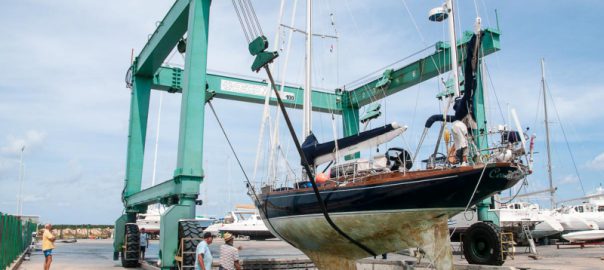
Unser letzter Tag in Kuba entschädigte uns ein bisschen für alle Probleme, die wir vorher gehabt hatten. Zwar waren wir nicht wie versprochen die erste Jacht, die an diesem Morgen in den Travellift kam, aber immerhin die zweite 🙂 Den Weg durch den Hafen zum Travellift meisterten wir ohne weitere Zwischenfälle und keine halbe Stunde später hing unsere CESARINA mal wieder im Kran. Dietmar gab den jungen Mechaniker noch eine Lehrstunde zum ThemaMaxProp-Propellereinstellen und als dann eine knape Stunde später wieder im Wasser war, ließ sich unsere CESARINA wieder wie gewohnt manövrieren. Das war ein wunderbares Gefühl :-). Ein letztes Mal mussten wir zurück auf die andere Hafenseite und machten am Zoll-Steg fest. Innerhalb von 30 Minuten waren wir ausklariert. Wahrscheinlich war man froh, uns endlich los zu sein :-). So brauchten wir auch gar nicht über die Liegeplatzgebühren der einen Woche langen Zwangspause zu diskutieren – dafür wollte uns niemand etwas berechnen 🙂

Also waren wir um halb zwei endlich auf den Weg. Unser nächstes Ziel waren die Bimini Islands, die zu den Bahamas gehören. Dort wollten wir einklarieren und dann weitere Inseln der Bahamas besuchen. Auch brauchten wir noch zeitnah eine Starterbatterie für unseren Generator, die wir auf Kuba auch nicht hatten auftreiben können. Die sollte in einer der zahlreichen Marinas dort zu bekommen sein 🙂

Die für diesen Schlag eher moderat angekündigten Bedingungen wurden schon in Laufe des Nachmittags eher sportlich. The strong Gulf Stream created an unpleasant and steep wave with the fresh northerly wind. After all, we were making very fast progress and were running close to the wind at between eight and ten knots all night long. That's how we managed it 180 Nautical miles easily in 26 Hours.

Although the prices at the marina in the Bahamas put us off because they were shockingly high, We wanted to treat ourselves to this special luxury for the first night. Once we arrived at North Bimini, all we had to do was motor in the fairway between the islands and moor in a marina. That was definitely our plan. Unfortunately it shouldn't work that way. Although the depth of the fairway is at least 15 foot was specified, we sat with ours 2,6 meters of draft (handsome 9 Foot) on the ground at the level of the second fairway buoy. At least it was just sand and after some back and forth we got free again, without the current pushing us against the buoy. So get out of here quickly:-( and no marina that night. We anchored at a safe distance on the north side of the island in front of the beach. After the tiring night we were motivated, Now I have to clear and clear the dinghy and get the battery, equal to zero. So we took our first swim in the crystal clear water and decided, to sail on to Grand Bahamas the next morning. According to the district guide, there was a marina there 30 feet of water depth. That should probably be enough for us. Dann würden wir halt einen Tag später einklarieren 🙂 Und da die Marina ein Teil einer großen Werft war, würden wir dort wohl auch eine Batterie für den Generator bekommen.

ZwischenspielDas Geheimnis der verschwundenen Schuhe

Als wir am Dienstagabend an unserem Liegeplatz in der Marina angekommen waren, bekamen unsere Flip-Flops wieder ihren angestammten Platz auf dem Ponton zugewiesen. Jetzt gab es keinen Grund mehr, sie mit an Deck zu nehmen 🙂 Am nächsten Morgen mussten wir dann aber feststellen, dass meine Schuhe nicht mehr an Ihrem Platz standen. Dietmars waren aber noch da. Ich schob das Verschwinden auf das Gewitter mit dem heftigen Wind bis zu 38 Node, das gestern Abend noch über den Hafen gezogen war. Anscheinend hatte es meine Schuhe einfach weggepustet. Warum Dietmars aber noch da waren, blieb weiterhin ein Rätsel.

Am nächsten Morgen, nach einer völlig windstillen Nacht, standen nur noch zwei rechte Schuhe am Ponton. Jetzt fühlten wir uns irgendwie doch ein bisschen veräppelt. Wer würde denn zwei linke Schuhe klauen???? Das machte doch wirklich keinen Sinn. Geduldig suchte ich einen Teil des Hafenbeckens nach den verschwundenen Schuhen ab. Auch hier war nichts zu sehen. Die verbliebenden linken Schuhe wanderten also in den Mülleimer und wir machten uns daran, in der Marina neue zu kaufen. Diese blieben aber nicht mehr am Steg, sondern sicherheitshalber an Bord.

Gestern Abend haben wir den dreisten Dieb dann erwischt 🙂 Einer der vier Hunde, die zur Zollstation gehören, scharwenzelte an unserem Ponton herum. Leider war diesmal nichts Fressbares für Ihn zu holen. Wir beobachteten ihn dabei, wie er unsere Festmacher erst ausgiebig beschnüffelte und sie danach in der Schnauze über den Ponton zerrte. Nachdem er uns bemerkt hatte, zog er unverrichteter Dinge wieder von dannen. Und den Vieren hatten wir immer unsere Essensreste vorbei gebracht. Schwer vorstellbar, dass sie Schuhe für Hundekuchen gehalten haben. Yummy! Was für eine undankbare Bande 🙂

Cuban shipyard drama - 2. Akt

Quite frustrated from yesterday, we waited for news from the shipyard early the next morning, when should we come to the travel lift. But it took until the afternoon, until a time slot finally became available for us.

Motivated, we got ready for the casting off maneuver. The harbor master helped us with the lines, so that we could safely move our ship, which was a bit difficult to maneuver at the moment, over to the travel lift. But we had barely solved the last spring, Everything no longer went according to plan. Instead of driving forward away from the dock, Our CESARINA drove backwards and was pulled closer and closer to the bridge by the wheel effect of the screw. I quickly jumped off the boat, to join forces with the harbor master to prevent a collision with the next power box. Dietmar tried to get on board, to get the boat in the right direction, but his efforts were in vain. Even when idling it kept going backwards. All attempts to engage forward gear, were in vain. The bow was already so far away from the pontoon because of the crosswind, that I neither the middle line, could still reach the bow line. Only a stern line was within reach. But we couldn't stop the boat as it was reversing. We tried from the pontoon, to keep the damage as low as possible and keep the boat off the dock. But even a slowly turning screw and 23 Tons of weight develop quite a bit of force. Das hässliche Geräusch des am Ponton entlangschrammenden seitlichen Hecks werde ich lange nicht vergessen. Auch konnten wir den Zusammenstoß mit dem nächsten Stromkasten nicht mehr verhindern. Good, dass es kubanische Qualitätsarbeit war und der Kasten sich mühelos von unserer CESARINA umlegen ließ 🙁 Etwas Glück im Unglück sollte man ja auch haben. Dietmar machte in der Zeit unseren Anker klar und ließ in herunter. Ich sprang hinten wieder an Bord und stoppte endlich die Maschine mit dem Stoppschalter. Endlich war Ruhe im Schiff. Wir lagen quer im Hafenbecken und weit genug für weitere Beschädigungen am Schiff vom Ponton entfernt. Mein Herz klopfte bis zum Hals. Das durfte wirklich nicht wahr sein. After a few minutes of silence, the panic subsided and we began to analyze the situation.

It showed, that our shift cable broke the first time we engaged reverse gear. So you could switch gears, wherever you wanted. Reverse gear was there and it stayed that way. Our CESARINA could only be stopped by switching off the engine.

The harbor master, who was also visibly shocked, organized a boat, that maneuvered us back to the jetty. There we were then able to assess the damage caused. On both sides of the rear, some very deep scratches and a dented exhaust pipe were visible from a distance. Our new wind control system was also bent during the campaign. If the wind control system hadn't protected the stern and rudder from the pontoon, things would have been much worse. That looked really bad and left me feeling helpless, Anger and sadness :-(. But as I said, it could have been much worse. Good, that our ship is so stable and strong.

The power box was quite easy to put back on its foundation. At least the harbor master was happy again. We will probably only be able to see the exact extent of the damage in the Tavel lift. This means, once we make it to the other side of the harbor. A long way to go until then, to find a suitable shift cable here in Cuba, turned out to be almost impossible the next day. So Dietmar had to come up with something. It took him two days to repair it, until we were able to successfully complete the first test drive. In the evening we had some Pina Colada with extra “Vitamin R” to compensate. ("R"=Ron). A week to be ticked off and forgotten in almost every way. Only one thing is certain. Chickens are more likely to hunt foxes in the future, before we ever end up in a Cuban shipyard again under normal circumstances. After the crash, not even the boss came to see us to check that everything was going well. No further comments are necessary.

Cuban shipyard drama – 1. Akt

In der Karibik ticken die Uhren anders und auf Kuba erst recht 🙂

Schon nach Dietmars Rückkehr in die Marina war klar, dass unser ursprünglicher Zeitplan wohl nicht eingehalten werden würde. Und als ich eine Woche später in der Marina ankam, waren nur 60% der alten Farbe komplett vom Rumpf entfernt worden. Am dem Montag, an wir eigentlich zurück ins Wasser wollten, griffen wir auch zum Spachtel und unterstützen die Jungs von der Werft beim-abkratzen der alten Farbschichten. Amazing, was man an einem Tag alles schaffen kann, wenn man tatsächlich arbeitet und nicht nur mit dem Werkzeug in der Sonne steht :-(. Auf der schon fertigen Seite gingen die Schleifarbeiten zum Glätten der Oberflächen aber gut voran. By Tuesday afternoon, miraculously, all of the paint had been removed and one side had already been completely sanded. So every day we got closer to our goal step by step and at some point it was clear, that our CESARINA on Tuesday, the 3. She should get back into her element in May. We were initially excited.

Now if everything worked out, we would only be a week late compared to our original plans. By now we were fed up with the expensive and boring marina life up here on the remote northern tip of Cuba. And we were actually already hanging in the travel lift at one o'clock. The areas, which were previously covered by the supports, were painted and then we finally went back into the water.

Finally she was swimming again and we were looking forward to a more pleasant life on board. We would spend another night in the marina, before we sail on to the Bahamas tomorrow morning – At last :-). Dietmar started the machine and put it in reverse, to slowly maneuver out of the box. Unfortunately, something completely unexpected happened: Our CESARINA drove forward???? You too, what was that????? We gave it a second try, which unfortunately produced the same result. And when the forward gear was engaged, she drove ……backward. She also hardly developed any thrust. Something had gone terribly wrong.

We also had the shaft bearing replaced at the shipyard, which unfortunately had more play than it should have. During this campaign the mechanics also had ours “Max-Prop”, the rotary wing propeller, have to dismantle. Although Dietmar had insured himself several times, whether one knows how to handle such a propeller, Something probably went wrong during reinstallation or rather when reassembling it. The shaft itself turned in the right direction, So our problem could only be the propeller. Now the big discussion began. A mechanic was called to help. His recommendation, simply turn the shift cables around, But Dietmar didn't get any enthusiasm at all. After some back and forth we went back into the lift and the CESARINA out of the water again. Of course, that didn't do our fresh anti-fouling paint any good. So now the “experts” started working on the propeller again and, surprisingly, something had really gone wrong. So everything was taken apart again and then put back together the other way around. Dietmar asked several times, whether all the settings are correct now. With a folding propeller you can adjust different angles of the blades (gradient), which are then fundamentally crucial for the thrust, that the propeller generates. Now that would all be wonderful, was the answer.

Back in the water we were able to report our first successes. We drove forward again in forward gear and backwards again in reverse gear. Otherwise we were still a long way from “wonderful”.. Unfortunately, the incline was set incorrectly and that meant another, short stay in the shipyard for the CESARINA . But not today, because it was already after six o'clock and nobody wanted to do it anymore. Least of all Dietmar, whose mood and lack of understanding of so much inability had reached its absolute lowest point. He would have been better off doing it himself!

So we maneuvered ourselves over to the jetty. Unfortunately, even this simple maneuver was without wind because the propeller was set completely wrong, which made revving the engine impossible, a real challenge and it took a while, until the CESARINA was finally properly moored. We had had enough for today. Our planned onward journey to the Bahamas was therefore cancelled, as we would now miss our weather window. Dietmar reinstalled the shift lever for the gas and gearbox, den der Mechaniker der Werft ausgebaut hatte. At least there was order on board again and we could prepare for tomorrow. Dietmar intensively studied the Max-Prop installation instructions, so that you can do the work yourself tomorrow. We preferred not to trust the shipyard employees anymore. I took another look at the weather forecast. The wind would turn to the north from Thursday and was unfortunately coming from the front. So we would probably stay with Cuba for a bit longer. You could also call it port days against your will. But the real disaster was yet to follow and would overshadow everything that had come before.

Inexhaustible supplies

That actually sounds very desirable: inexhaustible supplies of chocolate, Diesel or money. That's what everyone really wants. Unfortunately, we only have an inexhaustible supply of mosquitoes. Although we carefully sealed the hatches and doors with insect screens, things go well for us every night. Whenever the wind falls asleep (which is usually around two in the morning), they come in droves. You kill one, two more come out of their hiding places. Morning, when the shipyard slowly comes to life, We are still lying crumpled and stabbed in our beds :-(. A boat on land is really not much fun.
Nevertheless, we are finally making good progress. On Monday we earned the recognition of the shipyard workers and scratched the paint from the hull of the CESARINA together with the shipyard workers in the scorching heat. So yesterday all the paint was finally removed and most of the hull was already sanded. Things were finally moving forward. When we weren't busy working on the boat, we worked hard on it, to bring the website back up to date. So as of today, all reports up to 8. April online. The pictures, which were created during our tour of Cuba, have been viewed and sorted and the travel reports will be ready and online by next weekend.

lll

Tobacco until the bitter end

Today we had to go to Vinales, our next destination, not many kilometers to drive. But they had it all. We decided, to drive along the road along the coast, which was comparable in size to the streets according to our street map, which we had used many times. How exactly roads in Cuba are classified, will probably remain a mystery to me forever. While we've been comfortable with it so far 50 or 60 kilometers per hour traveled, were more than today 30 kilometers per hour is almost life-threatening. Deep potholes and real ditches made the journey an adventure. We didn't really care. At the low speed you could at least comfortably stop at every other corner and take a photo.

Because my mother hadn't seen that much of the sea yet, we tried to compensate for that today. In this less touristy area, hardly any roads led to the sea or a beautiful beach. The first time we landed in a tiny settlement and could only catch a glimpse of the water through the gardens. The second time we found a tiny harbor with fishing boats in a beautiful bay. We were always looked at with interest, but never spoken to or harassed. So in the afternoon we reached more touristy paths again and visited the first cave, of which there are quite a few in this part of Cuba. After the short walk through the not particularly impressive cave, We ended up at the back of the mountain in a huge restaurant, which was clearly designed to accommodate large numbers of tourists. Now it was almost deserted and we could take a coffee break in peace. The way back to the parking lot took us through the first tobacco fields and directly past a drying shed. The tobacco farmer was happy to be persuaded in exchange for a small tip, to allow us a short tour. We probably weren't the only ones, who asked about it :-).

When we arrived in Vinales, like every evening, we first looked for our accommodation. It was somehow not so nice on the third little street, far from the town center. We were welcomed at the casa by a family friend, der wohl besser Englisch sprach als die Hausherren. Es gäbe Probleme mit der Toilette und man würde uns deshalb anderswo unterbringen. Good, dann mal los. Ohne Klo ist ja auch nicht besonders lustig 🙂 Unser neues Domizil, lag direkt neben einer Bauruine an der Hauptstraße in der Nähe der Bushaltestelle. Da das Verkehrsaufkommen in Kuba doch noch recht gering ist, war das dann doch nicht so dramatisch, wie es sich jetzt anhört. Der Weg in die Stadt war jetzt auf jeden Fall deutlich kürzer und angenehmer als vorher. Das heutige Abendessen wollten wir wieder in der Casa einnehmen. Vorher machten wir noch einen ersten Rundgang durch die Stadt bzw. durch das Dorf. Besonders gut gefielen uns die Häuser mit ihren großen, zur Hauptstraße hin offenen Terrassen, auf denen immer mindestens zwei Schaukelstühle standen. Es gab viele Bars und Restaurants und auf dem Platz vor der Kirche war schon die Musikanlage für den heutigen Samstagabend aufgestellt. Wir entschieden uns auch noch für einen kleinen Cocktail vor dem Abendessen 🙂 Normalerweise trinke ich sehr gern einen Mojito, aber heute war ich in Probierlaune. Ein Cubata sollte es diesmal sein. Am nächsten Tag habe ich im Internet gegoogelt, was da eigentlich drin sein soll. Von der vorgeschriebenen Cola habe ich keinen Tropfen schmecken können. Vielleicht lag es daran, dass so viel Rum in mein Glas gewandert war, dass für die Cola einfach kein Platz mehr war. Nach dem Cocktail war ich auch jeden Fall für den restlichen Abend bedient. The delicious dinner didn't help either. I was blissfully in my bed before ten and not even the mosquitoes could disturb my sleep.

We had plans for the next morning, first to visit the Cuva de los Indios. The large stalactite cave is a popular excursion destination, because you could take a boat along an underground river. We reached the cave before the first coach and were able to enjoy the atmosphere undisturbed. After a short walk, we had to wait patiently for a seat at the jetty. I don't even want to imagine, how long you have to wait here, if three buses have arrived beforehand, because only one boat fits in the cave. You'll probably end up queuing through the entire cave straight after the checkout. But we really enjoyed the tour just behind the entrance to the cave. We wandered around a bit on foot, before we went back to the car. Another cave was on the agenda for today. On the way we passed a very strange work of art. A huge depiction of evolutionary history adorned one of the bizarre rock faces. The altar for a wedding was being set up against this backdrop. The artwork alone was horrific. Who would want to get married here??????

The caves of St. Thomas were the complete contrast to the Cuva de los Indios. There were no longer any tour groups to be found here. We started talking to a German family who was also waiting. You had to allow two to three hours to visit the cave. Sturdy shoes were required. The rest of the equipment (Helmet and headlamp) you then got it here. That was also the reason, why they have been sitting here for almost two hours. Too many people and no more equipment. That was the reason, why things didn't go any further for her here. As my mother had been battling an air conditioning cold for a few days, we decided against the strenuous undertaking. It was already shortly after midday and thunderstorms were forecast for the afternoon. We didn't want to travel there by car. So fuhren wir gemütlich zurück nach Vinales und verbummelten den Nachmittag in der Stadt. Am Horizont hatten sich bereits dicke Wolken zusammen gebraut und so war uns die ursprünglich geplante Wanderung in die Tabakfelder zu riskant. So besorgten wir einige Mitbringsel für die Daheimgebliebenen und besuchten den kleinen botanischen Garten direkt im Stadtzentrum. Die Gewitter hatten ein Einsehen mit uns. Nicht ein einziger Tropfen fiel vom Himmel. Unser Abendessen in der Stadt genossen wir ein weiteres Mal bei strahlendem Sonnenschein auf der Terrasse. So wünscht man sich das doch im Urlaub 🙂

Jetzt waren wir schon zwei Tage von Tabakpflanzen umgeben und noch immer hatten wir keinen Einblick in die Kunst der Zigarrenherstellung. That should change today. After breakfast we drove to Pina del Rio. Here we wanted to visit the cigar factory. The city seems to be one of the richer ones in Cuba, because the traffic density was incredibly high. I was really relieved then, as I parked our rental car on the side of the road. Walking was simply more flexible. But this morning the city was somehow too hectic for us and we decided spontaneously, to drive directly to the tobacco plantation, which we also wanted to visit. It was a little outside and good 30 We found her in minutes. Here we were shown around in peace and were allowed to look at everything. We were also shown the procedure of rolling cigars. The Robeinas plantation is continued by the founder's grandson. We were also able to get to know him personally. Denn während uns im Tabakschuppen der Trocknungsprozess erklärt wurde, kam er mit seiner kleinen Tochter herein. Er erklärte, dass die junge Dame jeden Morgen eine selbstgerollte Zigarre von ihm verlangen würde und machte sich unter ihren kritischen Augen auch direkt ans Werk. Kurze Zeit später hielt die junge Dame die gewünschte Zigarre in der Handein gelungener Kontrast zu ihrer Windel 🙂

Vor den Toren der Plantage nutzen wir noch die Gelegenheit, ein paar Zigarren als Mitbringsel zu erstehen. Then it was time, dem Tabak den Rücken zu kehren und weiter nach Havanna zu fahren, der letzten Station unserer Rundreise.

Noch gute 200 Kilometer lagen vor uns, bevor wir in Havanna den Mietwagen abgeben dürfen. In den letzten Tagen hatte er schon manchmal merkwürdige Anwandlungen gehabt. Morgens musste man schon etwas Überzeugungsarbeit leisten, damit der Motor nach dem Anlassen auch an blieb und nicht einfach wieder ausging. Zwischenzeitlich hakte auch das Gaspedal 🙂 und ließ sich nicht durchtreten. Andersherum wäre es aber deutlich schlimmer gewesen 🙂 Kleinigkeiten eben. Jetzt auf dem Weg nach Havanna spielte uns die Benzinuhr einen letzten Streich. Eigentlich hatten wir reichlich genug Benzin im Tank, um bequem nach Havanna zu kommen. Jetzt fehlten noch fünfzig Kilometer und wir standen plötzlich auf Reserve. Auf der Autobahn war natürlich weder eine Ausfahrt noch eine Tankstelle in Sicht. Das Autofahren in Havanna ist ja eh eine anspruchsvolle Angelegenheit. Da wäre es doch schön gewesen, if at least you didn't have to worry about gas. It took what felt like an eternity, until we finally found a gas station. Quickly filled up again 15 liters of fuel. Now we could relax and get lost in Havana. First we should go to our casa, which was centrally located on the edge of the old town and then we would have to get rid of the rental car by five o'clock. Now we had to slow down a bit. We slowly circled our casa in the old town. One one-way street led to the next, but at some point we reached our goal. The first impression didn't inspire us. My mother stayed in the car: “I’m not getting off here…” This clearly wasn’t a particularly good start. The house with the house number 204 war wirklich keine besondere Schönheit. But like so often, I wanted to take a look first. Maybe it wasn't so bad after all. There was definitely no sign anywhere to be found, so I wondered up to the third floor. The entire floor was separated from the stairwell by a massive lattice door. Behind it, after the dark and spooky stairwell, it looked surprisingly clean and well-kept. There was nothing left to complain about in the apartment itself. With the help of the host, we dragged our luggage upstairs and settled in. Now all we had to do was become the car. The shortest route to the Hotel Central was about one kilometer on the map. Until we first found the hotel and then a parking space, We probably drove ten times the distance. The formalities were quickly completed and we were now able to explore Havana on foot. From Parque Central we walked past the “Capitolio National”.. The streets were full of more or less well-maintained vintage cars and they tried to persuade us to take a tour of the city several times. But not today, was our standard answer. Tomorrow we would come again. The atmosphere in the city was very pleasant and relaxed. We took a detour to the sea and walked a bit on the Malecon, the waterfront promenade, along. There was always something going on here and many Cubans enjoyed the sunset here. We were back at the casa in time for dinner. The boss personally cooked and served Cuban-style shrimp. With the huge portions you would probably have fed twice as many people, but we fought bravely. After dinner we wandered around the old town for a bit. With a mojito in hand, we sat at the “Plaza de la Cathedrale” and let the evening end relaxed.


Further and further west

We hadn't actually seen that much of Trinidad yet. We wanted to catch up on that before we continued our journey to Cienfuegos. We were hoping, to be able to take a look into one of the old palaces of the sugar barons, which were then built around the Plaza Mayor. But we only succeeded to a limited extent. Der berühmteste „Palacio Brunet“ war leider wegen Renovierung geschlossen und gewährte uns nur einen kleinen Einblick durch den völlig kaputten Fußboden hindurch in die erste Etage :-). In einem weiteren Palace war eine Galerie untergebracht, aber immerhin konnte man dort schon mal hinein gehen 🙂 In einem dritten war ein Museum eingerichtet, das für uns eher nach einem wilden Sammelsurium von Dingen ohne besonderes Konzept aussah. Danach war unser Bedürfnis nach Bildung erstmals gestillt und wir tauschten in Trinidad nach schnell Geld bei der Bank, bevor wir in weniger touristische Gegenden kamen. Geldautomaten gibt es hier zwar schon, aber sie sind selten und auch nicht einfach zu finden. Geld bekommt man aber mit der Kreditkarte bei jeder Bank. Man muss sich nur brav an die Spielregeln halten und sich hinten in der Reihe anstellen. Da kann mitunter schon mal ein bisschen dauern. Auch sollte man nicht unbedingt im Bikini eine Bank aufsuchen, denn ein Bankenbesuch ist eine ernste Angelegenheit, die angemessene Kleidung erfordert. Aber das ist ja in Deutschland nicht anders 🙂

Well equipped, we set off for Cienfuegos. We passed around midday 15 Kilometers before the city there is a sign for the botanical garden. Here you would definitely find a pleasant place for a lunch break. The botanical garden turned out to be a huge park, which is easiest to navigate by car. As expected, we found a restaurant in the middle and had a delicious lunch. In this area of ​​the garden it was also easy to move around on foot and so we had a long walk after dinner. Many different geckos crossed our path and of course there were hummingbirds too. Not just the black ones, but also beautiful colorful specimens. We did see the fast fellows, aber für ein Foto hatte es leider nicht gereicht 🙂 Eigentlich sehr schade.

Cienfuegos erreichten wir am späten Nachmittag. Unsere Casa präsentierte sich diesmal ziemlich gewöhnungsbedürftig, aber es war ja auch nur ein Quartier für eine Nacht. Ein hervorragendes Frühstück am nächsten Morgen würde die Nacht auf den gesundheitsschädlichen Matratzen hoffentlich wieder ausgleichen :-). Cienfuegos war unsere erste Station direkt am Meer und so fuhren wir zuerst zum Ende der Landzunge, auf der die Stadt erbaut wurde. Neben einigen beeindruckend schönen und gut restaurierten Gebäuden kamen wir auch am Yachthafen vorbei. Wenig vertrauenserweckend war das Wrack eines alten Zweimasters, das halb gesunken an einem Steg lag 🙂 In der Bucht vor der Marina sahen wir mehrere deutsche Schiffe, unter anderem auch die SY MARLIN von Michael Wnuk. Da wir aber im Mietwagen leider kein Dinghi dabei hatten, konnten wir nicht einmal „Hallo“ sagen. Vielleicht sieht man sich ja später noch einmal 🙂

Den Abend verbrachten wir dann in der Altstadt am den zentralen Platz Parque Marti und am Fischereihafen. Im Gegensatz zu den Städten, die wir bisher besucht hatten, waren die Gebäude der Stadt in einem ziemlich guten Zustand. Anscheinend wird in Kubas größtem Zuckerexporthafen immer noch mehr Geld verdient als in anderen Teilen des Landes. Leider fehlte es der schönen Stadt aber irgendwie an Leben. After watching the fishermen at work for some time, This evening ended quite early for us.

The next morning we followed the coast and passed the historic Bay of Pigs, from which the Americans 1961 an invasion began, to overthrow Fidel Castro. As is well known, this failed. Today only a museum and many memorial plaques bear witness to times long past. The only really defensive one, that we were still able to discover on this beautiful coast, were thousands of crabs. Unfortunately, these were also on the coastal road and challenged Dietmar's driving skills. Unfortunately, many other drivers were not so successful and soon had to change their tires. Die Mietwagengesellschaften warnen vor den Krabben als Hauptursache für Reifenpannen in diesem Gebiet 🙁

Unsere Endstation für heute war Playa Larga, ein kleiner Ort auf der Zapata-Halbinsel. Die Halbinsel ist ein Feuchtgebiet mit großen Mangrovenwäldern und steht komplett unter Naturschutz. Auf dem Rio Hatiguanico soll aber man eindrucksvolle Bootsfahrten unternehmen können. Unsere bisherigen Erfahrungen hatten uns gelehrt, dass es besser ist, solche Dinge vor Ort zu organisieren und am besten mindestens einen Tag im Voraus. So machten wir uns zuerst auf den Weg ins Infozentrum des Nationalparks. Die Lage des Zentrums war in meiner Karte so merkwürdig eingetragen, dass wir auf dem Weg dorthin wenn auch unbeabsichtigt schon die erste Tour durch den Park unternommen hatten. Gut eine Stunde hoppelten wir auf einer ausgefahrenen Piste durch den dichten Wald, bevor wir an der anderen Seite von einem sehr erstaunten Wachmann wieder herausgelassen wurden. Beim zweiten Versuch fanden wir das Infozentrum direkt an der Hauptkreuzung von Playa Larga. Da sind wir zuvor bereits schon zweimal dran vorbei gefahren 🙂

Leider war nach der langen Trockenzeit nicht mehr genug Wasser im Rio Hatiguanico, um eine Bootsfahrt zu unternehmen. Schade, but of course something like that can happen. But a route was recommended to us, which we were able to drive alone with our rental car. Either today, later in the afternoon or tomorrow morning. That was a nice alternative, that we wanted to perceive. Since it wasn't even midday yet, we decided to go to the crocodile farm first, which was very close. This was probably a major tourist destination in the region as was the neighboring lagoon, which could be easily reached by boat. The whole thing was very commercial. However, there was no museum about the Taino Indians in the Laguna, as I thought I read in the travel guide, but just a hotel, that similar huts to those once stood in the Taino villages, had. We really didn't need that. But if we were already there, we wanted to at least pay a visit to the crocodiles. The animals were really scary and we were happy about the high fences, that safely protected us from them.

After the excursion we went to Playa Larga, to look for our casa. As soon as I looked through the address, I noticed it, that somehow the street information was missing here. During our wandering through the small town we couldn't see the name of our casa anywhere. So we had to question ourselves with our hands and feet, because almost no one here could speak more than three words of English. But at some point we found someone else, der schon einmal von der Casa Gretty gehört hatte 🙂 Sie lag etwas vor der Stadt gegenüber des großen Hotels. Once there, mussten wir gleich doch nochmal fragen. Gegenüber dem Hotel waren mehrere Baustellen zu sehen und auch andere Häuser, in denen wir lieber nicht übernachten wollten. An einem schmalen Pfad ganz weit von der Hauptstraße entfernt stand ein Schild: „Zimmer zu vermieten“. Das war der richtige Weg 🙂 und er führte uns zu einem sehr gepflegten Haus in einem schönen Garten. Das hatten wir jetzt nicht erwartet. Herzlich wurden wir mit frischen Kokosnüssen empfangen, die der Hausherr direkt von der Palme geschlagen hatte.

Dietmar war von der ganzen Fahrerei heute etwas angeschlagen und so beschlossen wir Frauen am späten Nachmittag nochmal alleine in Richtung Nationalpark zu fahren. Leider erreichten wir das Gate erst gegen fünf Uhr und bekamen die Info, dass es für einen Besuch heute bereits zu spät sei. Morgen ab acht Uhr wäre wieder geöffnet. Good, dann halt morgen wieder 🙂 An diesem Abend ließen wir uns in unserer Casa bekochen und lernten die Krabben von heute Morgen auch von ihrer schmackhaften Seite als Delikatesse kennen. Wie eigentlich immer war das Essen lecker und sehr reichhaltig. Als wir nach dem Essen noch im Dunkeln draußen saßen, lernten wir die kubanischen „Glühwürmchen“ kennen. Im ersten Moment wollte ich am liebsten die Flucht antreten. Die Schaben ähnlichen Tieren haben grün-leuchtende Augen 🙂 echt gruselig 🙂 und fliegen können sie auch noch.

Am nächsten Morgen nach dem extra frühen Frühstück lernten wir einmal wieder die Besonderheiten des Tourismus auf Kuba kennen. Motiviert standen wir um kurz nach acht Uhr am Gate des Nationalparks. Der Wärter ließ uns nicht durchfahren. Geöffnet wäre jetzt schon, aber wir bräuchten einen lokalen Führer. Da müssten wir erstmal zum Infozentrum fahren. Am liebsten wäre ich sofort an Ort und Stelle explodiert. Dann eben nicht. Im Infozentrum hatte niemand erwähnt, that we couldn't do the tour alone and yesterday the guard could have given us a tip. So we left with nothing accomplished and slightly frustrated.

So today we had to drive another long stretch of highway, to get to the western part of the island. This area of ​​Cuba is known for tobacco- and coffee cultivation and the impressive landscape with the mountain forests of the Sierra de los Organos and the humped karst rocks of the Valle de Vinales. After a week, Dietmar had seen enough of Cuba and perhaps also enough of the concentrated female photo power. In the afternoon he took a taxi towards Varadero, to supervise the work on the boat in the marina and also do various work on board. We set off to Soroa alone for the first time. Here we visited the famous orchid garden with more than 800 different types. Then we continued on to “Las Terraza”, a Cuban model settlement in the middle of the national park, which our tour guide described as very idyllic. Once again we had to realize, that our ideas of idyllic were far apart, although the entire village was already very well maintained on the banks of a lake.

We were back in our casa in time for dinner and then fell tired into bed. The entertainment options in Soroa (actually not much more than a street intersection) waren auch sehr begrenzt 🙂 Hier sagen sich wirklich Hase und Igel gute Nacht, oder eher die Hähne, die schon morgens um halb drei mit kräftigem Geschrei den neuen Tag herbei krähen.

Ein Lebenszeichen aus Kuba

Jetzt sind wir schon eine Woche auf Kuba und haben noch nichts von uns hören lassen. Die Überfahrt war anstrengend und seit Freitag steht unsere CESARINA sicher an Land und gönnt sich etwas Wellness, während wir seit Samstag mit meiner Mutter zusammen mit dem Auto Kuba unsicher machen. Wenn wir zurück sind, gibt es viel zu berichten. Jetzt reicht die Zeit leider nicht aus 🙁


Rund um Trinidad

Schon recht früh hatten wir unser Gepäck wieder in unserem Mietwagen verstaut, der zwei Tage bewacht vor unserer Casa auf uns gewartet hatte. Für uns war es immer noch ein komisches Gefühl, das Auto nicht einfach irgendwo parken zu können. Im sicheren Deutschland macht man sich einfach keine Gedanken darüber, ob über Nacht die Reifen verschwunden sein könnten. In Kuba scheint es wohl zum Alltag zu gehören. Jedes Privatquartier, in dem wir übernachteten, hatte ein eigenes Konzept zur Sicherung des Autos 🙂 Das ging von der privaten Garage oder Stellplatz auf dem Grundstück, über den extra angeheuerten nächtlichen Bewacher bis zu bewachten Parkplätzen in der Nähe der Unterkunft. Wir waren sehr dankbar über den angebotenen Service und konnten am Ende der Reise unser Auto mit den vier ursprünglich montierten Reifen ohne zwischenzeitliche Pannen in Havanna wieder abgeben.
Our way to Trinidad first took us to Santi Spiritus. The city was a real relaxation for us after Santa Clara. Significantly smaller, But even in much better condition, we enjoyed a stroll through the well-kept old town. In a small ice cream parlor we each had a large sundae for lunch. The local currency, pesos, was also required here. Good, that we had exchanged some money in our casa that morning. This time we were able to pay without any problems. Before we continued, we went to a Cuban shop. We just wanted to get a picture of it, what are called luxury goods (especially soap) actually cost in Cuba. You read about it in many travel guides, dass Reisende von den Einheimischen um Seife oder Kugelschreiber angebettelt werden. Sicherheitshalber hatten auch wir einen Vorrat dabei. Bisher hatte sich aber die Nachfrage in Grenzen gehalten. Während Obst und Gemüse sehr günstig ist, kann man Seife in Kuba schon als Luxusware einstufen. In dem besuchten Laden kostete ein normales Stück Seifen zwei CUC. Für mein Gefühl schon fast unvorstellbar teuer. Für zwei CUC kann man sehr leicht zwei gut gefüllte Tüten mit Obst und Gemüse einkaufen. Irgendwie stimmte hier das Verhältnis nicht 🙁
Tinidads Geschichte hängt direkt mit dem Zuckerrohranbau auf Kuba zusammen. So lag das „Valle de los Ingenios“ auf unserem Weg in die Stadt. Rechts und links der Straße findet man Ruinen und Überreste der vor langer Zeit so reichen Zuckerplantagen. Nicht immer ist es aber einfach, diese im Reiseführer beschriebenen Schätze in der Wirklichkeit auch zu finden. Die Beschilderung ist zwar in diesem Teil von Kuba schon besser als im Restlichen, doch für europäische Verhältnisse ist sie immer noch kaum vorhanden. So fanden wir ein schönes, recht gut erhaltenes Herrenhaus, das ehemals zur größten Zuckerfabrik Kubas gehörte. Die Überreste der Fabrik waren aber leider komplett abhandengekommen 🙂 Wir besuchten den 45 Meter hohen Turm „Torre de Iznaga“, der damals zur Beaufsichtigung der Sklaven benutzt wurde. Kurz vor Trinidad machten wir einen letzten Stopp. Von dieser alten Zuckerplantage waren sowohl die Ruinen der Sklavenunterkünfte als auch der Produktionsanlagen vorhanden. Ein kompliziertes Wasserleitungssystem hatte die gesamte Plantage mit frischem Wasser versorgt. Das Haupthaus wird momentan gerade restauriert. Leider fehlte an allen Orten, die wir besucht hatten, jede Form von Hintergrundinformationen, die einen Besuch erst lehrreich gemacht hätten. Zwar hatten wir unseren Reiseführer dabei, der in vielen Punkten weiterhelfen konnte, doch wäre es oft schön gewesen mehr über die Orte zu erfahren, die wir besucht hatten 🙁 Aber vielleicht kommt das ja irgendwann einmal noch.
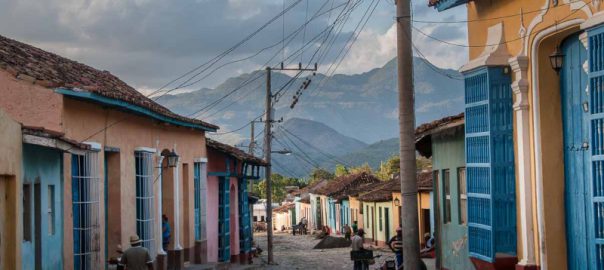
Trinidad selbst gehört zum Weltkulturerbe der UNESCO und wird als eine der schönsten Städte Kubas beschrieben. The cobblestones of the old town streets are famous and infamous, which is not particularly inviting for a stroll and is also difficult to keep clean. Our casa was again right in the center of the city in a good location 300 year old house, that is only eight meters wide, but it felt like twenty meters deep. Over the years, each generation had grown a little more. The backyard was very pleasant, from which our rooms opened. So you could easily enjoy some fresh running. After the long day, we just took a short walk through the city and were treated to dinner in our casa. Many of the private accommodations in Cuba also offer dinner, which is usually good and cheap. That was the case here too. After a delicious bean soup, we had grilled lobsters with salad, Rice and banana chips in huge quantities. You really couldn't complain.
The next day we wanted to go hiking in the nearby mountains. Topos de Colantes was recommended as a starting point. The way there wasn't far, but through the narrow ones, We had been on the winding roads for quite a while. Our path took us further and further up into the mountains and the barren landscape became increasingly covered in pine trees- and eucalyptus forests. Unfortunately, when we arrived at the information center, we didn't get what we had hoped for, a hiking map or guide. Far. After some back and forth it was clear, that no knowledgeable guide could be found for today. We were told that the hiking trails were not signposted either. The probability, that we would find our way back to our car this evening, could generally be classified as low and it was clearly discouraged, to go off alone. A little disappointed, we thought about it, to leave without having accomplished anything. But then another opportunity presented itself: From the nearby Casa de Cafe a signposted path led to a cave by a river. So we set off. The path led through the forest. In my opinion, unfortunately with far too many steep uphill and downhill sections. But that's just how it is in the mountains. Given the prevailing temperatures and my incredibly poor physical condition, I was already panting heavily. Nevertheless, the excursion into Cuba's nature was a blessing. We were alone for almost the entire route and were able to discover and observe many different new bird species, who are at home in this area. At the destination it became refreshingly cold. To get into the caves you had to wade through the stream, the water temperature felt like ten degrees. So our strained feet got a well-deserved cool down and then we headed back to the starting point with motivation. Sweaty and tired, we were happy, to be able to sit in the car again.
On the way home we were stopped by a Cuban road construction site. Schon am Morgen hatten wir eine Baustelle passiert, wo der alte Straßenbelag durch neue Betonplatten ersetzt wurde. Jetzt war aber gerade vor uns ein Betonmischer mit neuem Material angekommen. In mühsamer Handarbeit wurde der Beton erst in die Zwischenräume der schon gegossenen Platten gegossen und dann mit Schaufeln verteilt. Danach wurde die Oberfläche mit einem Brett grob abgezogen. Die Feinarbeit wurde abschließend mit der Maurerkelle erledigt. Das dauerte natürlich eine ganze Weile 🙁 Die armen Arbeiter, die in der Gluthitze diese schwere Arbeit machen mussten 🙁
Durch die Verzögerung kamen wir gerade noch so rechtzeitig in Trinidad an, that we were able to jump into the shower before meeting the Wolff family. Unfortunately, Trinidad was the last stop together and so we wanted to take the opportunity to have one last dinner together. This time the two had once again reserved a table in a charming restaurant, which was particularly noticeable due to its unusual interior design. tables, Chairs, Dishes and everything else were a collection of antiques from long ago, lovingly put together and staged. From the roof of the building you had an impressive view of the city and the beautiful sunset. We ended the evening with a mojito on the stairs in front of the Casa de Musica. Schade, dass das der letzte gemeinsame Abend gewesen war 🙁